Filing for bankruptcy is a major financial decision that can impact your life for years. While hiring a bankruptcy lawyer can help navigate the complex legal process, some individuals consider filing on their own, known as pro se filing, to save money. But is filing bankruptcy without a lawyer a bad idea? This detailed guide explores the risks, benefits, costs, and considerations involved in filing bankruptcy without professional legal assistance.
We will also provide examples, step-by-step guidance, and FAQs to help you understand whether going solo is a feasible option for your financial situation.
Understanding Bankruptcy
Bankruptcy is a legal process that allows individuals or businesses to eliminate or reorganize debt they cannot repay. Its main goal is to provide financial relief while giving creditors a structured way to recover part of what they are owed.
Types of Bankruptcy
- Chapter 7: Liquidation of non-exempt assets to pay creditors, with most remaining debts discharged.
- Chapter 13: Reorganization of debts into a 3–5 year repayment plan while keeping most property.
- Chapter 11: Typically, for businesses, restructuring debt while continuing operations.
- Chapter 12: Designed for family farmers or fishermen.
Knowing which type of bankruptcy fits your situation is critical, especially when filing without a lawyer.
Why People Consider Filing Bankruptcy Without a Lawyer
Cost Savings
Bankruptcy lawyers can charge $1,000–$2,500 for Chapter 7 and $2,500–$6,000 for Chapter 13. Filing pro se eliminates these fees, which can be appealing for individuals already struggling financially.
Simplicity of Case
Some cases are relatively simple, with few creditors and minimal assets, making self-filing manageable for people who are detail-oriented and comfortable handling legal documents.
Availability of Resources
Bankruptcy courts provide self-help guides, instructions, and forms for individuals who choose to file on their own.
Risks of Filing Bankruptcy Without a Lawyer
While it may save money upfront, there are several risks associated with filing bankruptcy without legal guidance.
Mistakes in Paperwork
Bankruptcy requires numerous forms, including schedules of assets, liabilities, income, and expenses. Errors or omissions can lead to:
- Case dismissal
- Delays in discharge
- Loss of exemptions
Example
A filer forgets to list a credit card debt. The creditor may later challenge the discharge, causing additional legal complications.
Misunderstanding Exemptions
Exemptions protect certain assets like your home, car, and personal belongings. Misapplying exemptions can result in unnecessary liquidation of property.
Example
Filing pro se without understanding state homestead exemptions could put your home at risk in Chapter 7.
Missing Deadlines
Bankruptcy has strict timelines, such as:
- Filing of initial petition
- Meeting of creditors (341 meeting)
- Completion of credit counseling and debtor education
Missing deadlines can delay your case or even prevent the discharge of debts.
Challenges With Creditors
Self-represented filers must respond to creditor objections, attend hearings, and negotiate settlements themselves, which can be intimidating and legally complex.
Limited Access to Negotiation and Strategy
Lawyers can negotiate with creditors, restructure payments, and advise on alternatives to bankruptcy. Filing without a lawyer means losing a professional strategy that could maximize debt relief and asset protection.
Benefits of Filing Bankruptcy Without a Lawyer
Lower Cost
The primary benefit is saving on legal fees, which can be significant for individuals with limited income.
Control Over the Process
Filing on your own allows you to manage every aspect of your case.
Learning Opportunity
Handling bankruptcy yourself provides a deeper understanding of your finances and legal obligations.
Who Might Be a Good Candidate for Filing Pro Se
While filing without a lawyer is risky, certain cases may be suitable:
- Single filer with few creditors
- No real estate or minimal assets
- Chapter 7 filing with straightforward finances
- Willingness to follow court instructions meticulously
Step-by-Step Guide to Filing Bankruptcy Without a Lawyer
If you decide to file pro se, these steps are essential.
Step 1: Complete Credit Counseling
- Must be completed within 180 days before filing
- Approved providers offer online or phone courses
- Completion certificate required for filing
Step 2: Collect Financial Documents
- Tax returns
- Pay stubs and income information
- Bank statements
- Mortgage, loan, and credit card statements
- List of all assets and debts
Step 3: Fill Out Bankruptcy Forms
Key forms include:
- Voluntary Petition (Form 101)
- Schedules of Assets and Liabilities (Forms 106A–J)
- Statement of Financial Affairs (Form 107)
- Chapter-specific forms
Accuracy is critical. Small errors can delay or dismiss your case.
Step 4: File Your Petition With the Court
- File at your local bankruptcy court
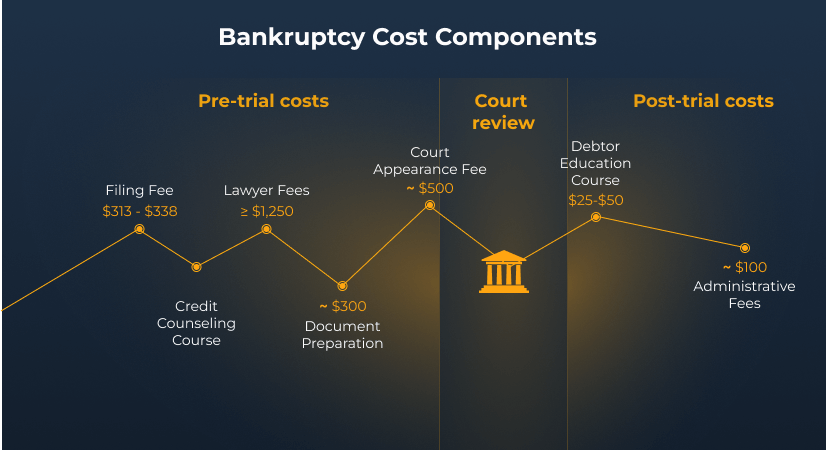
- Pay the filing fee ($338 for Chapter 7, $313 for Chapter 13; fee waivers may be available)
- The automatic stay goes into effect immediately upon filing
Step 5: Attend the 341 Meeting of Creditors
- Court-appointed trustee reviews your case
- Creditors may ask questions
- Must provide truthful and complete information
Step 6: Complete Debtor Education
- Required course to qualify for debt discharge
- The completion certificate must be filed with the court
Step 7: Obtain Your Discharge
- If everything is in order, the court discharges eligible debts
- Chapter 7: typically 3–6 months
- Chapter 13: after completion of repayment plan, usually 3–5 years
Common Mistakes Made by Pro Se Filers
- Leaving creditors off the schedules
- Miscalculating income or expenses
- Misunderstanding exemptions
- Missing deadlines
- Failing to attend required hearings or courses
Example of Filing Bankruptcy Without a Lawyer
Scenario
Jane, a single filer with two credit cards and a car loan, files Chapter 7 pro se:
- She completes credit counseling online
- Gathers financial documents and fills out required forms
- Files a petition and pays the court fee
- Attends the 341 meeting without representation
- Discharged $15,000 in debt in six months
Outcome: Successful discharge, but Jane spent significant time ensuring accuracy, responding to trustee questions, and researching legal requirements.
When Filing Without a Lawyer Is Not Recommended
- Multiple properties or complex assets
- Large number of creditors
- Business debts or past bankruptcy filings
- Risk of foreclosure or wage garnishment
- Legal disputes with creditors
In these cases, hiring a lawyer increases the likelihood of protecting assets and achieving a successful outcome.
Costs of Filing Bankruptcy Without a Lawyer
Even without a lawyer, bankruptcy is not free:
- Court filing fees: $338 for Chapter 7, $313 for Chapter 13
- Credit counseling: $10–$50
- Debtor education: $10–$50
- Copying, mailing, and document preparation: $50–$100
While legal fees are saved, the process can be time-intensive and carries a higher risk of mistakes.
Pros and Cons of Filing Pro Se
Pros
- Saves legal fees
- Full control over the case
- Opportunity to learn about bankruptcy law
Cons
- High risk of errors
- Time-consuming and complex
- Potential loss of assets
- Limited access to negotiations or creditor settlements
FAQs About Filing Bankruptcy Without a Lawyer
Can I file bankruptcy without a lawyer?
Yes, it is possible to file pro se, especially for simple Chapter 7 cases.
Is it a bad idea to file without a lawyer?
It can be risky. Mistakes can lead to dismissal, loss of assets, or delayed discharge. Complex cases usually require legal assistance.
How much can I save by filing without a lawyer?
Savings range from $1,000–$6,000, depending on whether filing Chapter 7 or Chapter 13.
Will the court treat me differently if I file pro se?
Courts allow self-represented filers, but judges and trustees may scrutinize filings more closely for errors.
Can I switch to a lawyer after filing pro se?
Yes, you can hire a lawyer mid-process if complications arise, but additional fees may apply.
Tips for Filing Bankruptcy Without a Lawyer
- Carefully follow official bankruptcy court instructions
- Double-check all forms for accuracy
- Attend all required meetings and courses
- Keep copies of every document filed
- Consider consulting a lawyer for guidance on complex issues, even if filing pro se
Alternatives to Filing Without a Lawyer
- Limited-scope representation: Lawyer reviews forms and offers guidance without full representation
- Legal aid organizations: Free or low-cost legal assistance for low-income individuals
- Bankruptcy clinics at law schools: Students provide guidance under attorney supervision
Conclusion
Filing bankruptcy without a lawyer can be an option for some individuals, particularly those with simple financial situations and few assets. It offers cost savings and full control over the process, but it comes with significant risks, including mistakes, lost exemptions, and delays.
For complex cases, multiple creditors, foreclosure risks, or wage garnishment, hiring a bankruptcy lawyer is highly recommended. If you choose to file pro se, careful preparation, attention to detail, and adherence to court instructions are essential. By weighing the pros, cons, and risks, you can decide whether filing bankruptcy on your own is feasible or whether professional legal guidance is the safer path to a fresh financial start.
This guide equips you with the knowledge to make an informed decision about filing bankruptcy and navigating the process confidently.