Filing for bankruptcy is a major financial decision, and one of the most important questions people have is: How much does a bankruptcy lawyer cost? Legal fees can vary widely depending on your location, type of bankruptcy, complexity of your case, and the lawyer’s experience. Understanding these costs is crucial for budgeting and deciding whether hiring a lawyer is the right choice.
This comprehensive guide explores the full fee breakdown for bankruptcy lawyers, explains what factors influence costs, and provides examples and answers to frequently asked questions.
Why Knowing Bankruptcy Lawyer Costs Matters
Bankruptcy can provide relief from overwhelming debt, but legal fees are an additional financial consideration. Knowing the costs in advance helps you:
- Plan your budget
- Avoid surprises
- Compare lawyers effectively
- Decide whether to hire a lawyer or file pro se
Factors That Influence Bankruptcy Lawyer Fees
Several factors determine how much a bankruptcy lawyer will charge.
Type of Bankruptcy
The cost varies depending on whether you file Chapter 7, Chapter 13, or another type of bankruptcy.
- Chapter 7: Generally simpler and less expensive
- Chapter 13: More complex, with a repayment plan that requires ongoing legal oversight
Case Complexity
- Number of creditors
- Amount of assets and exemptions
- Tax issues or previous bankruptcies
Geographic Location
Lawyer fees vary by region, with urban areas often having higher costs than rural areas.
Lawyer Experience
- Experienced bankruptcy lawyers charge more but may save time and reduce errors
- Less experienced lawyers may offer lower rates, but could risk mistakes
Average Bankruptcy Lawyer Fees
While fees vary, typical ranges can help you plan.
Chapter 7 Bankruptcy
- Average fees: $1,000–$2,500
- Includes: initial consultation, document preparation, filing, and court representation
- Example: A single individual with minimal assets may pay around $1,500 for a Chapter 7 case.
Chapter 13 Bankruptcy
- Average fees: $2,500–$6,000
- Includes: filing a repayment plan, ongoing court appearances, and updates to schedules
- Example: A person with a mortgage and multiple credit cards may pay $4,500 to $5,000 for Chapter 13 representation.
Chapter 11 and Chapter 12 Bankruptcy
- Typically, for businesses or family farmers
- Costs are higher and vary based on complexity, sometimes $10,000 or more
Common Additional Fees
Legal fees aren’t the only cost associated with bankruptcy.
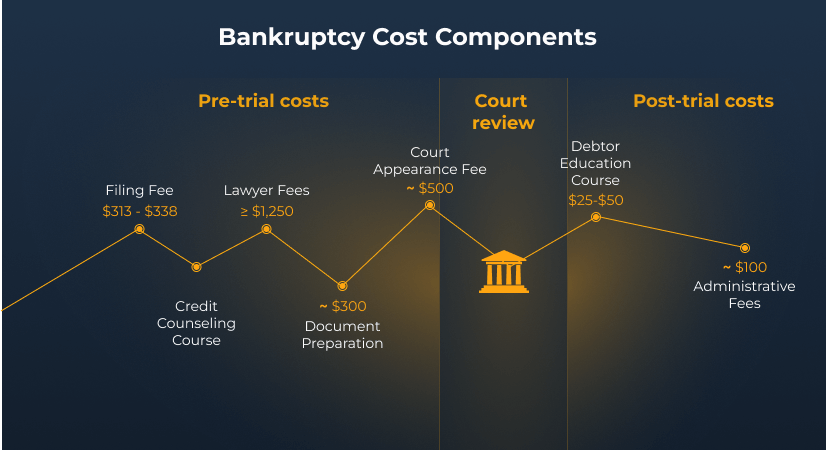
Court Filing Fees
- Chapter 7: approximately $338
- Chapter 13: approximately $313
- Fees may vary by state and are paid to the court
Credit Counseling and Debtor Education
- Mandatory for bankruptcy filing
- Costs range from $10–$50 per course
Miscellaneous Costs
- Document copying
- Postage
- Court-certified copies
- Credit report fees
These small fees add up but are necessary for the process.
Payment Structures for Bankruptcy Lawyers
Bankers may offer different payment arrangements.
Flat Fees
Most bankruptcy lawyers charge a flat fee covering the entire case.
- Pros: Predictable cost, easier budgeting
- Common for Chapter 7
Example
A flat fee of $1,800 includes all paperwork, court filings, and representation at the creditors’ meeting.
Hourly Fees
Some lawyers charge by the hour, especially for complex Chapter 13 or business cases.
- Rates: $150–$500 per hour, depending on experience and location
- Pros: Flexible for complex cases
- Cons: Total cost may be higher and less predictable
Retainers and Payment Plans
Many bankruptcy lawyers require a retainer upfront and may allow payment plans for the remaining balance.
Example
- Retainer: $500
- Remaining balance paid over 3–6 months
This helps make legal representation more accessible for individuals already facing financial challenges.
How Case Complexity Impacts Fees
Complex cases increase both time and cost.
Multiple Properties or Assets
- Protecting real estate, vehicles, or investments requires additional paperwork and strategy
- Lawyers spend more time calculating exemptions and preparing schedules
Example
A client with two homes and three vehicles may pay $2,500–$3,500 for Chapter 7, compared to $1,500 for a simple case with one car and no real estate.
Numerous Creditors
- Each creditor adds to the workload
- Lawyers must notify creditors, prepare schedules, and respond to challenges
Previous Bankruptcy Filings
- Prior filings can complicate eligibility and timing
- May require additional court motions or legal guidance
Geographic Differences in Lawyer Fees
Location significantly affects costs.
Urban vs Rural
- Major cities: higher overhead, more expensive lawyers
- Rural areas: fewer lawyers, lower fees, but potentially limited expertise
State Regulations
- Some states have additional filing requirements or legal nuances that affect lawyer fees
Examples of Bankruptcy Lawyer Fees in Different Scenarios
Example 1: Simple Chapter 7
- An individual with low income, one car, no real estate
- Lawyer fee: $1,500
- Court fee: $338
- Total: $1,838
Example 2: Complex Chapter 7
- Married couple, two homes, multiple vehicles, multiple creditors
- Lawyer fee: $2,800
- Court fee: $338
- Credit counseling: $50
- Total: $3,188
Example 3: Chapter 13 With Property
- Homeowner with mortgage, car loans, and 10+ creditors
- Lawyer fee: $4,500
- Court fee: $313
- Debtor education: $50
- Total: $4,863
Pros of Paying a Bankruptcy Lawyer
Expertise and Experience
Lawyers understand legal procedures, deadlines, and exemptions.
Avoid Costly Mistakes
Incorrect filings can delay or dismiss your case, adding time and cost.
Peace of Mind
Knowing a professional handles the process reduces stress and uncertainty.
Cons of Paying a Bankruptcy Lawyer
Higher Upfront Costs
Legal fees add to the financial strain for someone already in debt.
Not Always Necessary
Simple Chapter 7 cases may be manageable without a lawyer.
Risk of Overcharging
Some lawyers may charge above-average fees; always compare multiple options.
How to Reduce Bankruptcy Lawyer Costs
Compare Multiple Lawyers
Request quotes from at least 3–5 lawyers.
Negotiate Payment Plans
Many lawyers offer flexible payment arrangements.
Use Legal Aid Services
Low-income individuals may qualify for free or reduced-cost legal assistance.
Simplify Your Case
- Organize documents
- Limit unnecessary complications
- Be proactive in providing information
FAQs About Bankruptcy Lawyer Costs
How much does a bankruptcy lawyer cost on average?
Chapter 7: $1,000–$2,500
Chapter 13: $2,500–$6,000
Costs vary by location, complexity, and lawyer experience.
Can I file for bankruptcy without a lawyer?
Yes, but mistakes are more likely, especially in complex cases.
Are there payment plans available for bankruptcy lawyers?
Many lawyers offer payment plans or accept retainers to make fees manageable.
Does hiring a lawyer guarantee a successful bankruptcy?
No, but it improves your chances of success and helps protect assets.
Are there hidden costs in bankruptcy?
Additional costs may include court filing fees, credit counseling, and document-related expenses.
Signs of a Reputable Bankruptcy Lawyer
Check Credentials
- Must be licensed in your state
- Specialization in bankruptcy law is preferable
Read Client Reviews
- Look for consistent positive feedback and successful case outcomes
Ask About Fees Upfront
- Transparency is key; reputable lawyers provide detailed cost breakdowns
Alternatives to Hiring a Lawyer
If costs are prohibitive, alternatives include:
- Non-profit legal aid organizations
- Bankruptcy clinics at law schools
- Self-help guides from official bankruptcy court websites
While these can save money, they require careful attention to detail.
Conclusion
Bankruptcy lawyers provide valuable guidance, protection, and peace of mind during a stressful financial process. Costs vary depending on bankruptcy type, complexity, location, and lawyer experience. For Chapter 7, fees typically range from $1,000–$2,500, while Chapter 13 cases often cost $2,500–$6,000. Additional expenses include court filing fees, credit counseling, and debtor education.
Hiring a bankruptcy lawyer is a wise choice for complex cases, multiple creditors, significant assets, or previous bankruptcy filings. For simple cases, filing pro se is possible but carries risks. By understanding the full fee breakdown, comparing lawyers, and exploring alternatives, you can make an informed decision that balances legal protection with affordability.
Careful planning ensures that you can navigate bankruptcy successfully, protect your assets, and achieve a fresh financial start.